
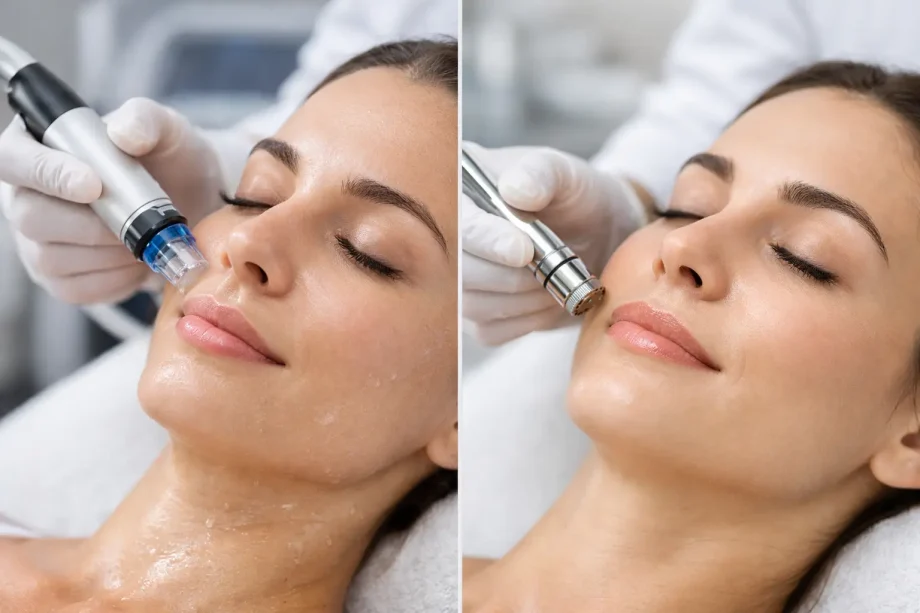
A treatment can leave your skin looking brighter after one appointment, yet the method matters as much as the glow. In the hydro peel versus microdermabrasion conversation, both treatments exfoliate and refresh the complexion, but they do so in distinctly different ways. The right choice depends on whether your priority is congestion, dehydration, rough texture, sensitivity, or more established signs of aging.
For many people in Singapore, skin concerns rarely arrive one at a time. Humidity, air conditioning, daily sunscreen, makeup, pollution exposure, and stress can contribute to a complexion that feels simultaneously dull, oily, dehydrated, and uneven. A professional skin assessment helps determine not just which exfoliating treatment to choose, but how strongly your skin should be treated that day.
Hydro Peel Versus Microdermabrasion: The Essential Difference
A Hydro Peel is a water-based facial treatment that typically combines gentle exfoliation, fluid infusion, and vacuum-assisted cleansing. As the device passes over the skin, it helps lift surface debris, excess oil, and impurities from congested areas while delivering treatment solutions chosen for the skin’s needs. The experience is often described as refreshing and comfortable, particularly when hydration is a major concern.
Microdermabrasion is a mechanical exfoliation treatment. Depending on the professional system, it may use a diamond-tipped handpiece or fine crystals to buff away accumulated dead skin cells from the skin’s surface. Suction may also be used to remove exfoliated cells. It is designed to refine texture and encourage a smoother, more polished appearance.
Neither treatment is universally “better.” Hydro Peel tends to offer a more hydrating, multi-step approach, while microdermabrasion is often selected for its direct resurfacing effect. Your therapist should adjust the treatment based on your current skin condition, not simply your usual skin type.
What a Hydro Peel Can Do for Your Skin
Hydro Peel treatments are especially appealing when skin looks tired but also feels tight, dehydrated, or congested. Rather than relying on abrasion alone, the treatment uses water and treatment solutions to loosen buildup while suction helps clear the skin. This approach can leave the complexion looking cleaner, plumper, and more luminous immediately after the facial.
The extraction element is one reason Hydro Peel is often favored by those with blackheads around the nose, chin, and T-zone. It can help decongest pores without the prolonged pressure of extensive manual extractions. That said, deeply embedded comedones may still require careful manual work by a trained therapist, and not every breakout should be extracted.
Hydro Peel is also well suited to skin that is dull from environmental stress. When dehydration is present, roughness can make fine lines look more visible and makeup sit unevenly. Restoring moisture after exfoliation helps create the soft, light-reflecting finish many clients associate with healthy radiance.
Who may prefer a Hydro Peel
A Hydro Peel may be a strong option if your skin is congested yet dehydrated, if you want visible freshness with little interruption to your schedule, or if you prefer exfoliation paired with hydration and calming facial care. It is also a useful choice before an event when the goal is a clean, smooth canvas rather than aggressive resurfacing.
However, “gentle” does not mean it is right for every flare-up. Skin that is sunburned, actively irritated, severely inflamed, or compromised from overuse of acids and retinoids should be assessed before treatment. In those moments, strengthening the skin barrier may be more beneficial than additional cleansing or exfoliation.
What Microdermabrasion Can Do for Your Skin
Microdermabrasion focuses more directly on surface texture. By polishing away a portion of the outermost layer of dead skin cells, it can help soften the look of rough patches, mild unevenness, and dull, thickened buildup. Skin often feels exceptionally smooth afterward, and leave-on skincare may apply more evenly.
For clients concerned with early textural changes, superficial discoloration, or a complexion that no longer looks as refined as it once did, a carefully planned series of treatments may support gradual improvement. It can also complement a professional home-care routine centered on hydration, brightening ingredients, and daily broad-spectrum sunscreen.
The treatment’s strength is also its trade-off. Mechanical exfoliation can be too stimulating when skin is reactive, very dry, or already sensitized. A treatment that is appropriate for resilient, oily skin may be excessive for someone who has recently used strong exfoliating products or has a weakened barrier.
Who may prefer microdermabrasion
Microdermabrasion may suit skin that feels rough, looks lackluster, or has stubborn surface buildup that does not respond to gentle cleansing alone. It can be particularly satisfying for those whose main concern is tactile smoothness and a more even-looking surface.
It is not usually the first choice for active inflammatory acne, rosacea-prone skin, eczema, open lesions, or significant irritation. Friction can aggravate redness in these situations. If pigmentation is a concern, treatment must also be approached thoughtfully, because excessive irritation can make uneven tone more noticeable, especially in melanin-rich skin.
Comfort, Downtime, and Immediate Results
Both treatments are typically noninvasive and can be performed without substantial downtime, but the after-feel is different. A Hydro Peel often leaves skin hydrated and refreshed, with a dewy finish. Mild temporary pinkness can occur, especially after extractions, but many people return to normal activities right away.
After microdermabrasion, skin may feel polished and slightly more sensitive for a short period. Some clients experience temporary redness or tightness, particularly after a stronger setting. It is wise to avoid heat, intense exercise, saunas, harsh exfoliants, and direct sun exposure immediately after either treatment.
The visible benefit from one session is often real, but it should be understood accurately. One facial can improve surface glow, smoothness, and hydration. More persistent concerns, such as pronounced pigmentation, deep acne scarring, and established lines, need a longer strategy. Consistent professional treatments, targeted home care, sun protection, and barrier support work together more effectively than an occasional intensive appointment.
How to Choose the Right Treatment for Your Goals
Start with the concern you want to change, then consider the condition of your skin on the day of treatment. If clogged pores, dehydration, and lack of radiance are your main frustrations, Hydro Peel may provide the more balanced result. If rough texture and surface dullness are the priority and your skin is resilient, microdermabrasion may be more appropriate.
Your current routine matters too. If you use retinoids, exfoliating acids, benzoyl peroxide, or at-home scrubs, tell your therapist. These products can increase sensitivity and may need to be paused for a period around your appointment, based on professional guidance. Do not assume more exfoliation will produce faster results. When the skin barrier becomes stressed, it can respond with redness, breakouts, dehydration, and uneven tone.
A skilled therapist also considers the season, your recent sun exposure, your event calendar, and whether your skin is recovering from a breakout or treatment. The most effective facial is not always the most intensive one. It is the one that improves your skin without pushing it beyond what it can comfortably tolerate.
Making Results Last After Your Facial
The days after exfoliation are an ideal time to be disciplined with gentle care. Use a mild cleanser, replenish moisture with appropriate hydrating products, and apply broad-spectrum sunscreen every morning. Avoid introducing a new active product immediately after treatment, especially if your skin feels warm, tight, or more sensitive than usual.
For clients seeking a more polished, rested complexion over time, a personalized plan may alternate treatments rather than repeat one method endlessly. A Hydro Peel can support cleansing and hydration during periods of congestion or dryness, while occasional microdermabrasion may be considered when resilient skin needs more focused surface refinement. At Bossi Face, that decision is best made through skin analysis and therapist guidance, with the treatment protocol and professional home care tailored to your response.
The best facial should leave you looking refreshed, not depleted. Choose the treatment that respects what your skin needs now, then give it the steady care it needs to keep that natural radiance visible long after you leave the treatment room.