
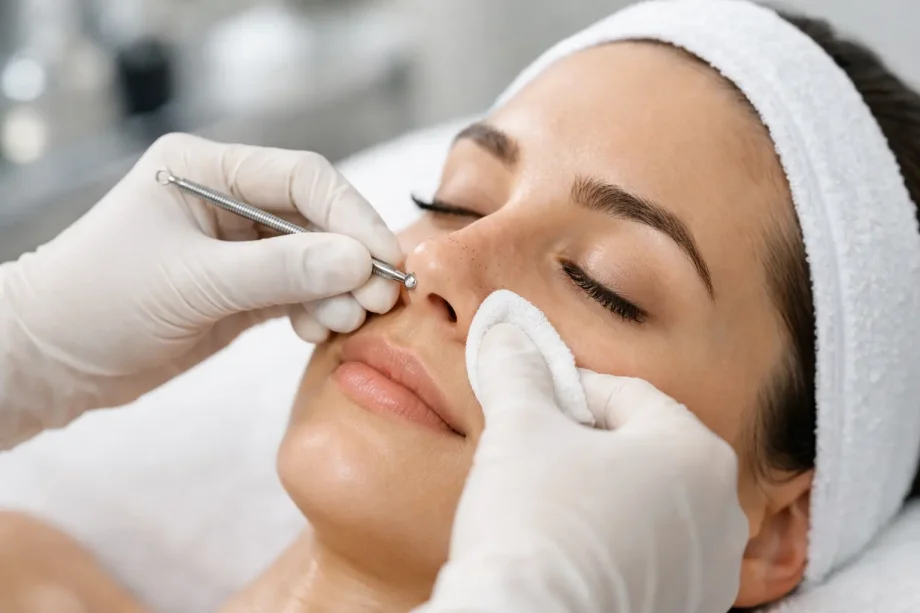
Blackheads can make skin feel persistently uneven, even when you cleanse carefully and invest in quality skincare. A professional facial extraction for blackheads addresses this congestion with controlled technique, skin preparation, and aftercare that respects your barrier, rather than leaving you with unnecessary redness or marks.
For many adults, blackheads are not a sign of poor hygiene. They are a common result of oil, dead skin cells, sunscreen, makeup, humidity, and environmental exposure collecting within the pore. The goal is not to aggressively empty every pore. It is to clear what is ready to be removed, support smoother skin texture, and create the conditions for clearer-looking skin over time.
What Facial Extraction for Blackheads Involves
Blackheads, also called open comedones, form when a pore becomes blocked with sebum and keratinized skin cells. The top of the plug is exposed to air, where oxidation gives it its dark appearance. It is not trapped dirt, so harsh scrubs and repeated squeezing rarely provide the refined result people hope for.
In a professional facial, extraction is one stage of a considered treatment protocol. Your therapist begins by assessing the skin’s hydration, sensitivity, congestion pattern, and current concerns. This matters because skin that is dehydrated, inflamed, or using active home-care products may need a gentler approach than skin with stable, localized congestion.
The skin is cleansed and softened through appropriate exfoliation, professional products, and, where suitable, treatment technology. Once the pore contents have softened, the therapist uses clean, controlled pressure to release blackheads that are ready to come out. Stubborn lesions should never be forced. Too much pressure can cause capillary damage, prolonged inflammation, or post-inflammatory dark marks, especially on skin prone to pigmentation.
A well-designed treatment then shifts from clearing to restoring. Calming masks, hydration, and protective finishing care help skin feel comfortable and look fresh after the appointment. The experience should feel precise and attentive, with the added comfort of a restorative facial ritual, not like an endurance test for your skin.
Why Professional Extraction Is Different From DIY Squeezing
It is tempting to examine pores closely in the mirror and squeeze anything visible. The challenge is that fingertips and nails cannot apply consistent, targeted pressure. They also introduce bacteria and can push congestion deeper into the follicle instead of releasing it.
Professional extraction is not automatically appropriate for every blackhead, either. A knowledgeable therapist knows when to leave an area alone, when to focus on exfoliation and hydration first, and when a recurring treatment plan will produce a better result than trying to clear everything in one session. This restraint is part of good skincare.
At home, the most useful role is maintenance. Gentle cleansing at night, daily sunscreen, and a routine selected for your skin condition can reduce the buildup that leads to visible blackheads. Over-scrubbing, abrasive tools, and frequent pore strips may create temporary smoothness but can also leave the skin dehydrated and reactive. When the barrier is stressed, oiliness and texture may become harder to manage.
Where Blackheads Tend to Appear
The nose is the area most people notice first, but blackheads can also appear on the chin, forehead, cheeks, and jawline. These areas have different causes and should not necessarily receive the same intensity of treatment.
The nose contains many active sebaceous filaments, which are natural structures that help move oil through the pore. They can look like tiny gray or dark dots and may refill quickly after extraction. Clearing them can improve the immediate appearance of texture, but it will not permanently remove them because they are part of normal skin function.
Blackheads along the jawline or cheeks may be influenced by richer makeup, hair products, friction from masks or phones, or an imbalanced routine. In Singapore’s heat and humidity, sunscreen and daily pollution exposure can also make thorough but gentle cleansing particularly valuable. A skin analysis helps separate true congestion from dehydration, irritation, or enlarged-looking pores, so treatment is matched to what your skin actually needs.
What Results Can You Expect?
After a careful extraction facial, skin often feels smoother and looks more refined, particularly around the nose, chin, and T-zone. Makeup may sit more evenly, and products can feel more comfortable on freshly cleansed, hydrated skin. The visible improvement can be immediate, although mild pinkness may occur in areas that required more attention.
Lasting improvement depends on the source of congestion. If blackheads are driven by regular oil production, climate, makeup habits, hormonal changes, or inconsistent exfoliation, they can return. This does not mean the facial did not work. It means blackhead management is most effective as a routine, combining periodic professional care with supportive home care.
For some clients, a single focused facial is ideal before an event or as a reset after a busy period. For persistent congestion, treatments spaced according to the skin’s tolerance may be more suitable. The right frequency depends on sensitivity, breakouts, use of retinoids or acids, and whether extractions are being paired with exfoliating treatments such as a Hydro Peel.
Preparing for an Extraction Facial
Come to your appointment with a clear picture of what you are using at home. Mention prescription acne treatments, retinoids, exfoliating acids, recent peels, waxing, or any skin reaction. These details allow your therapist to adjust the treatment and avoid over-treating sensitized skin.
For a few days beforehand, resist the urge to pick at visible congestion. Avoid introducing a new active product or using an intense scrub in an attempt to prepare your pores. Calm, well-hydrated skin is easier to assess and generally responds better to professional care.
You do not need to stop all skincare unless directed to do so. The aim is simply to prevent unnecessary irritation. If you are uncertain about a product, bring a photo of it or share the active ingredients during your consultation.
Aftercare That Protects Your Glow
After extraction, give your skin a short recovery window. Keep the routine simple: cleanse gently, use hydrating and soothing products, and apply sunscreen generously during the day. Avoid touching the treated areas, high-heat exercise, steam rooms, and strong exfoliating acids for the period recommended by your therapist.
If a small area feels tender, do not attempt a second extraction at home. Let the skin settle. A professional can also recommend the appropriate hydration, antioxidant, or pollution-defense care to support your specific concerns, whether that is dullness, sensitivity, uneven tone, or early signs of aging.
When Extraction May Not Be the Best First Step
Active, painful acne, broken skin, eczema flare-ups, rosacea irritation, or a compromised barrier may call for a calming and reparative facial rather than extensive extraction. The same is true after certain medical or cosmetic procedures. In these situations, forcing a pore-clearance treatment can delay recovery and make redness more visible.
A personalized facial should never be a fixed sequence performed the same way on every client. Some skin needs a greater focus on detoxification and refining texture. Other skin needs moisture, barrier support, massage, and a gradual plan before extractions are considered. The most polished results come from treating the whole complexion, not only the dots you can see.
Clearer pores are satisfying, but comfortable, resilient skin is the result worth protecting. Choose facial care that leaves you feeling both refreshed and understood, then allow consistent, thoughtful maintenance to do its quiet work between appointments.
One thought on “Facial Extraction for Blackheads Done Right”