
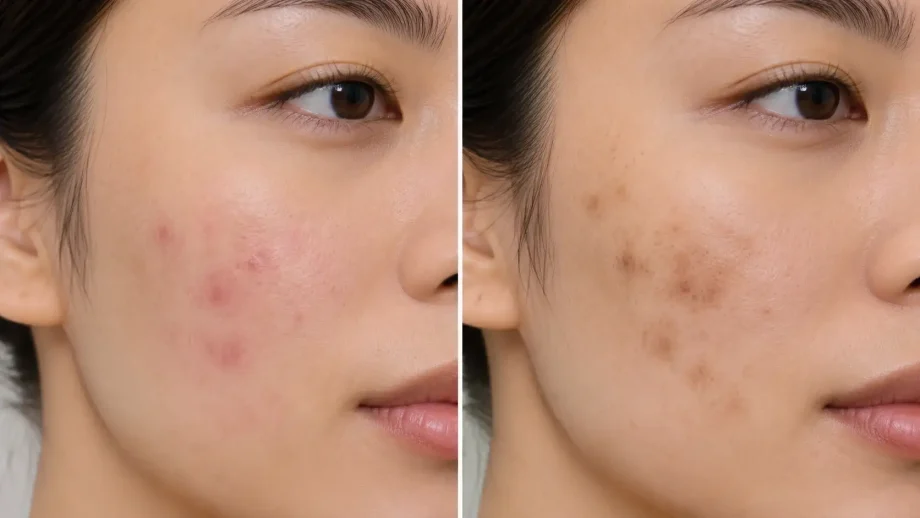
Have you noticed red or dark spots lingering on your skin long after a pimple has healed?
These marks are common after acne and are often caused by two different skin conditions: Post-Inflammatory Erythema (PIE) and Post-Inflammatory Hyperpigmentation (PIH).
Although both can develop after acne breakouts, they have different causes and appearances.
Understanding the difference between PIE vs PIH is important because each may require a different approach to treatment.
In this guide, we’ll explain how to identify these marks, what causes them, and how to improve their appearance.
What Is PIE (Post-Inflammatory Erythema)?
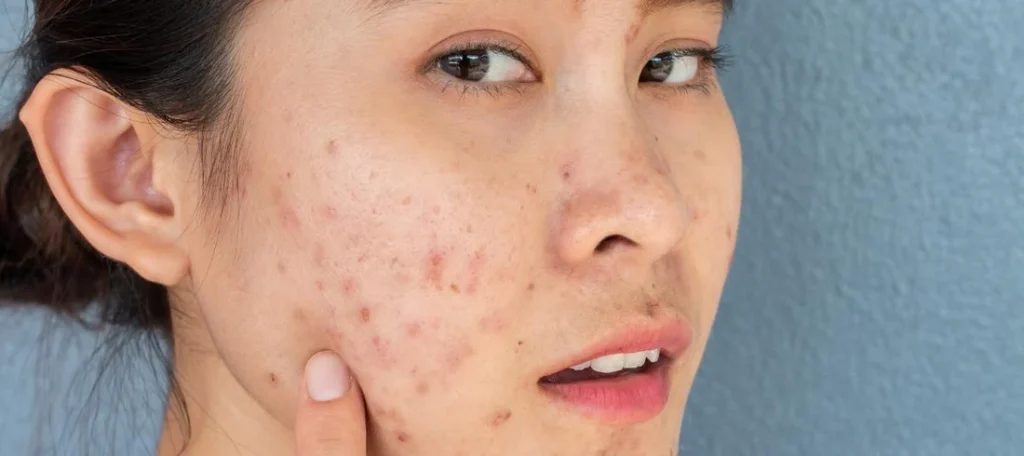
Post-Inflammatory Erythema (PIE) refers to the red, pink, or purplish marks that remain after an acne breakout or other skin inflammation has healed.
These marks are associated with changes in the small blood vessels near the skin’s surface, rather than excess melanin.
PIE is more noticeable in people with lighter skin tones, although it can affect different skin tones.
The marks may become more visible when the skin is irritated, exposed to heat, or experiencing inflammation.
Unlike acne scars, PIE does not usually involve permanent changes to the skin’s texture. However, the redness may take several months or longer to fade naturally.
What Is PIH (Post-Inflammatory Hyperpigmentation)?
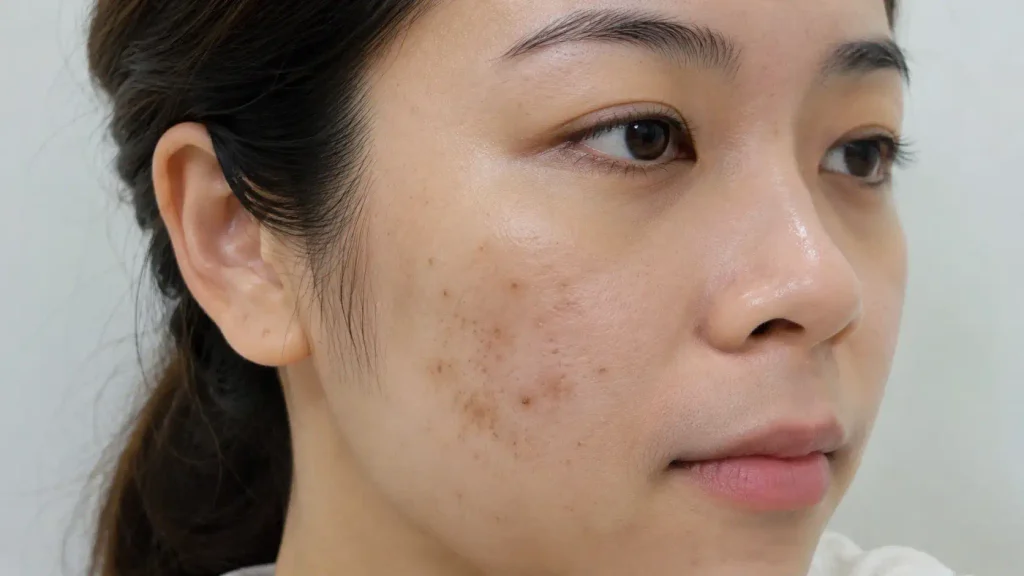
Post-Inflammatory Hyperpigmentation (PIH) occurs when the skin produces excess melanin following inflammation or injury.
This can leave behind flat brown, dark brown, or greyish marks after acne, insect bites, or other skin conditions.
PIH is particularly common in people with medium to darker skin tones because their skin may produce more melanin in response to inflammation.
Sun exposure can also make these dark marks more noticeable and prolong their appearance.
Unlike PIE, which is related to blood vessels, PIH is caused by excess pigmentation. Depending on how deep the pigment is, the marks may take several months or longer to fade.
PIE vs PIH: What Are the Main Differences?
Although PIE and PIH can look similar at first, there are several ways to tell them apart.
| Feature | PIE | PIH |
|---|---|---|
| Full name | Post-Inflammatory Erythema | Post-Inflammatory Hyperpigmentation |
| Appearance | Red, pink, or purplish marks | Brown, dark brown, or greyish marks |
| Main cause | Changes in superficial blood vessels after inflammation | Excess melanin production |
| Common trigger | Acne inflammation or skin irritation | Acne, skin injury, or inflammation |
| More common visibility | Often more noticeable on lighter skin | Often more noticeable on medium to darker skin |
| Treatment approach | Focuses on reducing persistent redness | Focuses on improving excess pigmentation |
A simple way to distinguish them is to look at the colour of the marks. Red or pink marks are more likely to be PIE, while brown or greyish marks are more likely to be PIH.
However, both can occur at the same time, so a professional skin assessment may be helpful.
Also Read: 5 Effective Skin Brightening Treatment in Singapore
How to Treat PIE and PIH
Since PIE and PIH have different underlying causes, their treatment approaches are not exactly the same.
Treatments for PIE (Post-Inflammatory Erythema)
The main goal of PIE treatment is to calm inflammation and reduce the appearance of persistent redness. Some approaches include:
- Gentle skincare: Use mild cleansers and moisturisers to support the skin barrier and avoid further irritation.
- Niacinamide: May help support the skin barrier and calm visible redness.
- Sun protection: Apply broad-spectrum SPF 30 or higher daily to protect the skin and prevent further irritation.
- Professional treatments: Certain vascular lasers or light-based treatments may help target visible redness. A qualified professional should assess whether these options are suitable for your skin.
Treatments for PIH (Post-Inflammatory Hyperpigmentation)
PIH treatment focuses on reducing excess pigmentation and preventing existing dark marks from becoming more noticeable. Common approaches include:
- Vitamin C: An antioxidant ingredient that can help improve the appearance of uneven skin tone.
- Niacinamide: May help reduce the appearance of dark spots and support a more even complexion.
- Azelaic acid: Can help improve post-acne marks and uneven pigmentation.
- Retinoids: Ingredients such as retinol may encourage skin cell turnover and gradually improve the appearance of pigmentation.
- Professional treatments: Depending on your skin condition, chemical peels or selected laser treatments may help improve pigmentation. These should be performed following a proper skin assessment, as unsuitable treatments can worsen pigmentation in some skin types.
For both PIE and PIH, avoid picking or squeezing pimples, as this can trigger further inflammation and increase the risk of additional marks.
Also Read: PIH Treatment, Effective Way to Fade Acne Marks
How to Prevent PIE and PIH After Acne
While not every post-acne mark can be prevented, good skincare habits can reduce the risk of persistent redness and pigmentation.
- Treat active acne early to minimise prolonged inflammation.
- Avoid picking, scratching, or squeezing pimples.
- Use gentle skincare products that do not irritate your skin.
- Apply sunscreen every day, even when indoors near windows.
- Introduce exfoliating products and active ingredients gradually.
- Maintain a consistent skincare routine to support your skin barrier.
Also Read: How to Reduce Acne Redness Effectively at Home
Treat PIE and PIH at Bossiface
Dealing with persistent red or dark acne marks? The first step is understanding whether your skin concern is PIE, PIH, or a combination of both, as each may require a different treatment approach.
At Bossiface, our team can assess your skin condition and recommend suitable treatments based on your concerns.
Options such as Brightening Facial Treatment and Collagen Facial Treatment may help improve overall skin appearance, dullness, and uneven-looking skin tone.
However, these treatments are not guaranteed to remove PIE or PIH, and more specific treatments may be needed depending on the cause of the marks.
Book a personalised skin consultation at Bossiface to explore suitable options for your skin. Visit us at 70 Shenton Way, #01-17/22, Singapore 079118.
Frequently Asked Questions About PIE and PIH
1. How do I know if I have PIE or PIH?
PIE usually appears as red, pink, or purplish marks caused by changes in superficial blood vessels after inflammation. PIH appears as brown, dark brown, or greyish marks caused by excess melanin production. A professional assessment can help distinguish between them.
2. Which is harder to treat, PIE or PIH?
Neither is always harder to treat. It depends on the severity, skin type, and how long the marks have been present. PIE may require treatments that target redness, while PIH often requires ingredients or procedures that address excess pigmentation.
3. Does sunscreen help with PIE and PIH?
Yes. Daily sunscreen helps protect the skin from UV exposure, which can worsen pigmentation and contribute to skin irritation. It is particularly important for preventing PIH from becoming darker.
4. Can PIE turn into PIH?
PIE and PIH are different conditions, and PIE does not automatically turn into PIH. However, ongoing inflammation or repeated skin irritation may contribute to pigmentation changes, so both types of marks can sometimes appear together.
5. How long does it take for PIE and PIH to fade?
Both can take several months or longer to fade, depending on their severity and individual skin response. Some cases of PIH may take longer, particularly when the pigmentation is deeper. Consistent skincare, sun protection, and suitable professional treatment can help improve their appearance over time.