
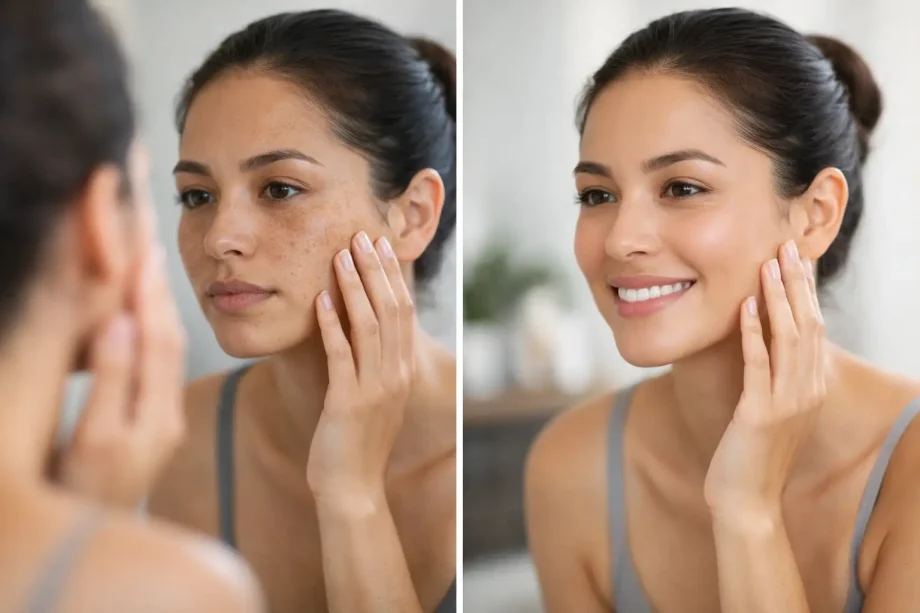
A dark mark can feel more noticeable than the breakout, blemish, or sun exposure that came before it.
The encouraging news is that hyperpigmentation treatment results can be visible, but the most satisfying improvements come from a calm, consistent plan rather than an overly aggressive approach.
When skin is supported with the right professional treatment, targeted home care, and daily protection, its tone can gradually look clearer, smoother, and more luminous.
Hyperpigmentation is not one single concern. It may appear as post-breakout marks, sun spots, uneven patches, or a general loss of clarity across the complexion.
The cause, depth, and age of the pigment all influence how skin responds, which is why a personalized skin analysis is more valuable than following a one-size-fits-all brightening routine.
Hyperpigmentation Treatment Results: A Realistic Timeline

A professional facial can deliver an immediate fresh, hydrated glow. Cleansing, gentle exfoliation, hydration, and facial massage help lift surface dullness and support circulation, so skin often looks more refined after one visit.
That early radiance is real, but it is different from changing established pigment.
For more noticeable improvement in uneven tone, most complexions need several weeks of steady care. In many cases, early changes include a brighter overall appearance and makeup sitting more evenly.
Over the following weeks, marks may begin to look softer at the edges or less intense against the surrounding skin. More stubborn, long-standing spots can take longer and may require a carefully maintained professional and home-care program.
The pace depends on your skin’s starting point. Recent post-breakout marks can respond differently from deeply set sun-related pigmentation.
Skin that is dehydrated, sensitized, or frequently inflamed may first need barrier support before it can comfortably tolerate more active brightening care. Pushing too hard can trigger irritation, and irritation can make pigmentation appear more persistent.
What to look for beyond fading spots
Progress is not always dramatic from one week to the next. Look for a complexion that appears more even in natural light, a reduction in dull or gray-looking areas, and a healthier reflective quality at the skin’s surface.
Taking a photo in the same location and lighting every few weeks can be more revealing than checking the mirror each day.
It also helps to set the right expectation: treatment is about managing pigmentation and improving visible clarity, not promising to erase every mark completely.
A skilled therapist should be honest about that distinction while creating a plan that respects your skin’s comfort and goals.
Why Pigmentation Can Return or Seem Unchanged
Melanin is part of the skin’s protective response. When skin perceives sun exposure, inflammation, friction, or irritation, pigment-producing cells can become more active.
This is why a brightening serum alone rarely delivers its full potential without daily sun protection and a routine that keeps the skin barrier comfortable.
In Singapore’s intense daylight and humid climate, incidental exposure matters. A quick walk outdoors, driving near a sunny window, or spending time by a pool can encourage pigment to deepen.
Consistent broad-spectrum sunscreen, applied generously in the morning and reapplied when appropriate, is one of the most important ways to preserve results.
Breakouts are another common reason marks linger. Picking, squeezing, or using harsh exfoliants can prolong inflammation and leave behind darker post-breakout marks. If congestion and pigmentation occur together, the most effective plan often addresses both.
Clearer pores, balanced hydration, and controlled exfoliation can reduce the cycle that creates new marks while brightening care supports the appearance of existing ones.
Building a Treatment Plan That Respects Your Skin
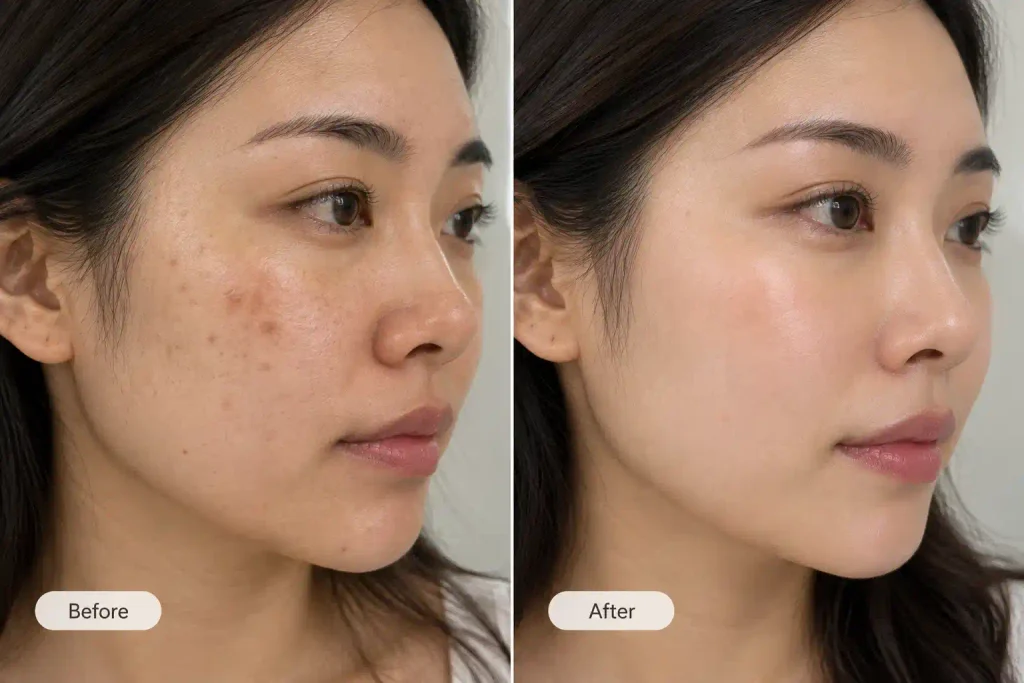
Pigmentation care works best when every step has a purpose. At Bossi Face, a therapist can assess whether your complexion is dealing primarily with surface dullness, congestion, dehydration, sensitivity, or visible sun-related spots.
The treatment can then be adapted instead of relying on a generic intensive peel or a random collection of products.
1. Start with a well-prepared complexion
A thorough cleanse and suitable exfoliation help remove the surface buildup that makes skin look flat and can prevent brightening products from performing at their best.
Professional exfoliation should be selected according to skin condition. Someone with resilient, congested skin may benefit from a different approach than someone with dry, reactive skin or recent inflammation.
Hydration is equally essential. Dehydrated skin can look rough and uneven, making pigmentation appear more pronounced.
Restorative hydration helps support the barrier, improves comfort, and gives the complexion a smoother, healthier-looking finish.
This is one reason a professional facial is more than a quick surface cleanse: the treatment should leave skin balanced, not stripped.
2. Use targeted care consistently at home
A therapist may recommend products containing brightening, antioxidant, and restorative ingredients suited to your skin’s tolerance.
Antioxidant support can be particularly valuable for complexions exposed to urban pollution and daily environmental stress, while hydrating formulas help maintain resilience as the skin adjusts to active care.
Introduce new active products thoughtfully. Using several strong exfoliating or brightening products at once can cause stinging, flaking, and redness. More product is not necessarily more progress.
A measured routine followed consistently is usually the better route to visible hyperpigmentation treatment results.
Your home routine should also be practical enough to maintain. For most people, that means a gentle cleanse, targeted serum or treatment, moisturizer, and sunscreen in the morning, with an appropriate evening routine.
The exact products and frequency should reflect your skin analysis, current sensitivity, and the treatments you are receiving in the salon.
3. Schedule treatments with a purpose
A single facial can be a beautiful reset before an event, especially when the complexion is dull or dehydrated. For pigmentation concerns, however, a series of appointments gives the skin the ongoing support it needs.
Your therapist can monitor how your skin responds, adjust exfoliation and hydration levels, and recommend when to focus on brightening, repair, or calming care.
The ideal interval depends on your concerns and your skin’s recovery. There is a trade-off to consider: more intensive treatment may suit some clients, while gentler, regular treatments may be the wiser choice for sensitive or easily inflamed skin.
The goal is visible refinement without compromising the barrier that keeps skin looking healthy.
Protect the Results You Are Creating
Think of brightening care and sun protection as a partnership. Professional treatments and corrective products help improve the look of existing uneven tone. Daily protection helps prevent new discoloration from undermining that work.
Apply sunscreen as the final step of your morning routine, including the face, neck, and any areas where pigmentation is visible.
Sunglasses, a hat, and seeking shade during prolonged outdoor time provide helpful additional defense. If you are using exfoliating or renewing products, this protection becomes even more essential because freshly renewed skin can be more vulnerable to visible discoloration from UV exposure.
Avoid treating skin roughly between appointments. Skip abrasive scrubs when the skin feels sensitive, resist picking at blemishes, and do not layer strong actives simply because a spot has not faded overnight.
A calm complexion is better positioned to show the benefits of professional care.
When to Seek Further Advice
A salon treatment plan is ideal for many common concerns around dullness, post-breakout marks, and uneven-looking tone.
However, new, rapidly changing, itchy, painful, or unusually shaped dark spots should be assessed by a medical professional.
Similarly, melasma, deeper pigmentation, or discoloration connected to hormonal changes may need dermatologist guidance alongside a supportive skincare routine.
The most rewarding results tend to come when you give your complexion time, protection, and intelligent care. Rather than chasing a dramatic overnight change, let each treatment be a restorative step toward skin that looks clearer, more even, and naturally radiant.
Ready to Treat Hyperpigmentation?
If dark spots, post-acne marks, or uneven skin tone are making your complexion look dull or uneven, the right hyperpigmentation treatment can help improve the appearance of discolouration and restore a more even-looking complexion.
At Bossiface, our team can assess your skin and recommend a suitable treatment based on your pigmentation, skin condition, and individual concerns. Contact us to book a personalised skin consultation and find the right approach for your skin.